Variations are where margin dies
Most builders do not lose their margin on the estimate. They lose it after the contract is signed, in the space between what was agreed and what actually gets built. One poorly managed variation register can wipe 8 to 12 points off margin before the roof is on.

Nathan Holloway
Founder · BuildHawk and Hawktress
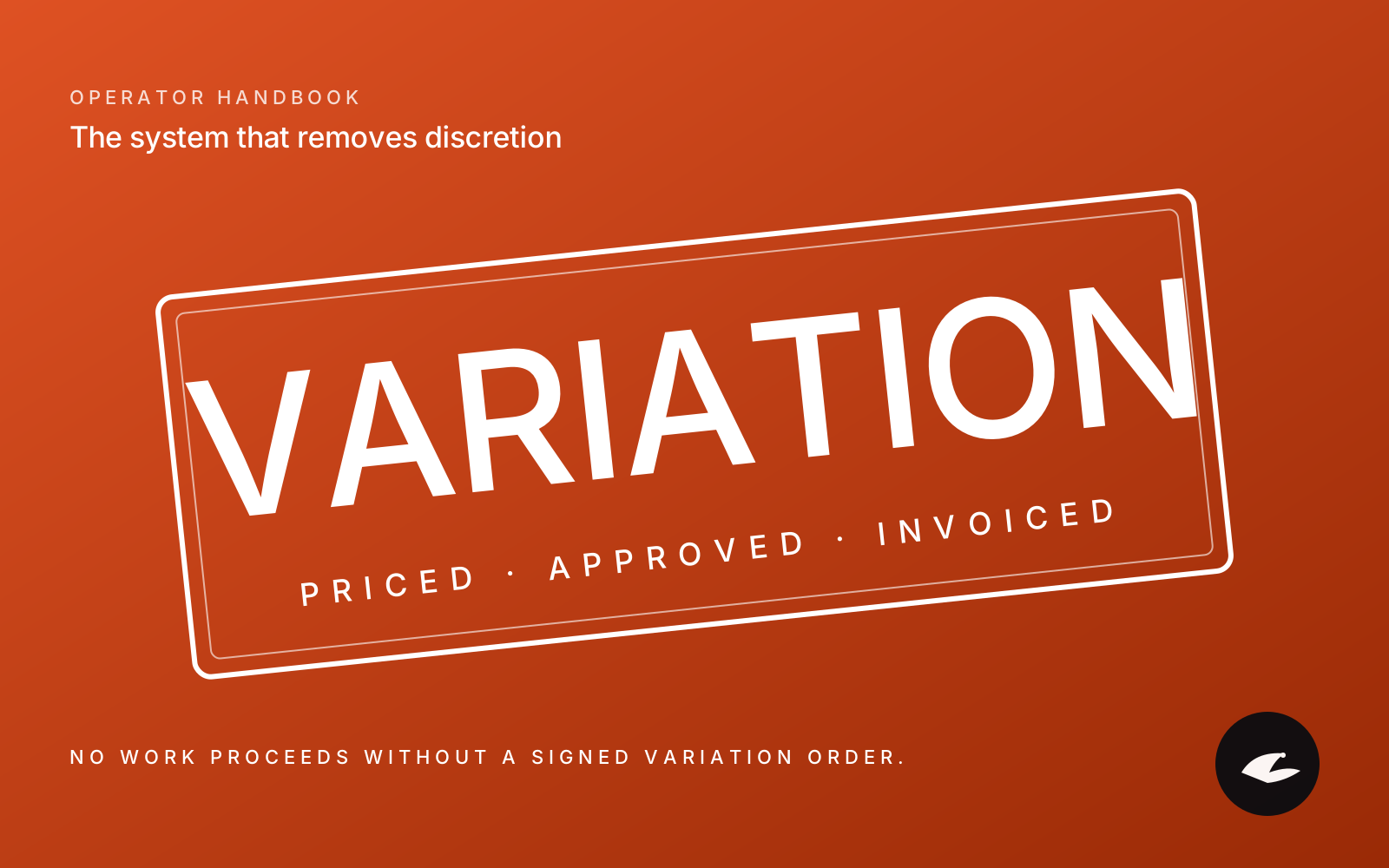
Most builders do not lose their margin on the estimate. They lose it after the contract is signed, in the space between what was agreed and what actually gets built.
Variations are not an inconvenience. They are the single highest-risk commercial event on any residential project. A builder running a 25% gross margin on a $1.2M contract has $300,000 to protect. One poorly managed variation register, three unpriced scope additions, and two "we'll sort it later" conversations with the client can wipe 8 to 12 points off that margin before the roof is even on.
Where the leakage happens
Variations fail at four consistent points: verbal instructions never formalised, variations priced too late, preliminaries not re-costed, and margin not applied consistently.
The standard that protects 25%
A variation that protects margin requires four non-negotiable steps before any work is instructed: written scope description, full cost build-up, margin applied at head contract rate, and client signature before work commences.
The 25% does not die on the estimate. It dies on the variations the builder did not enforce.
— BuildHawk
Written by
Nathan Holloway
Founder · BuildHawk and Hawktress
Related articles
See all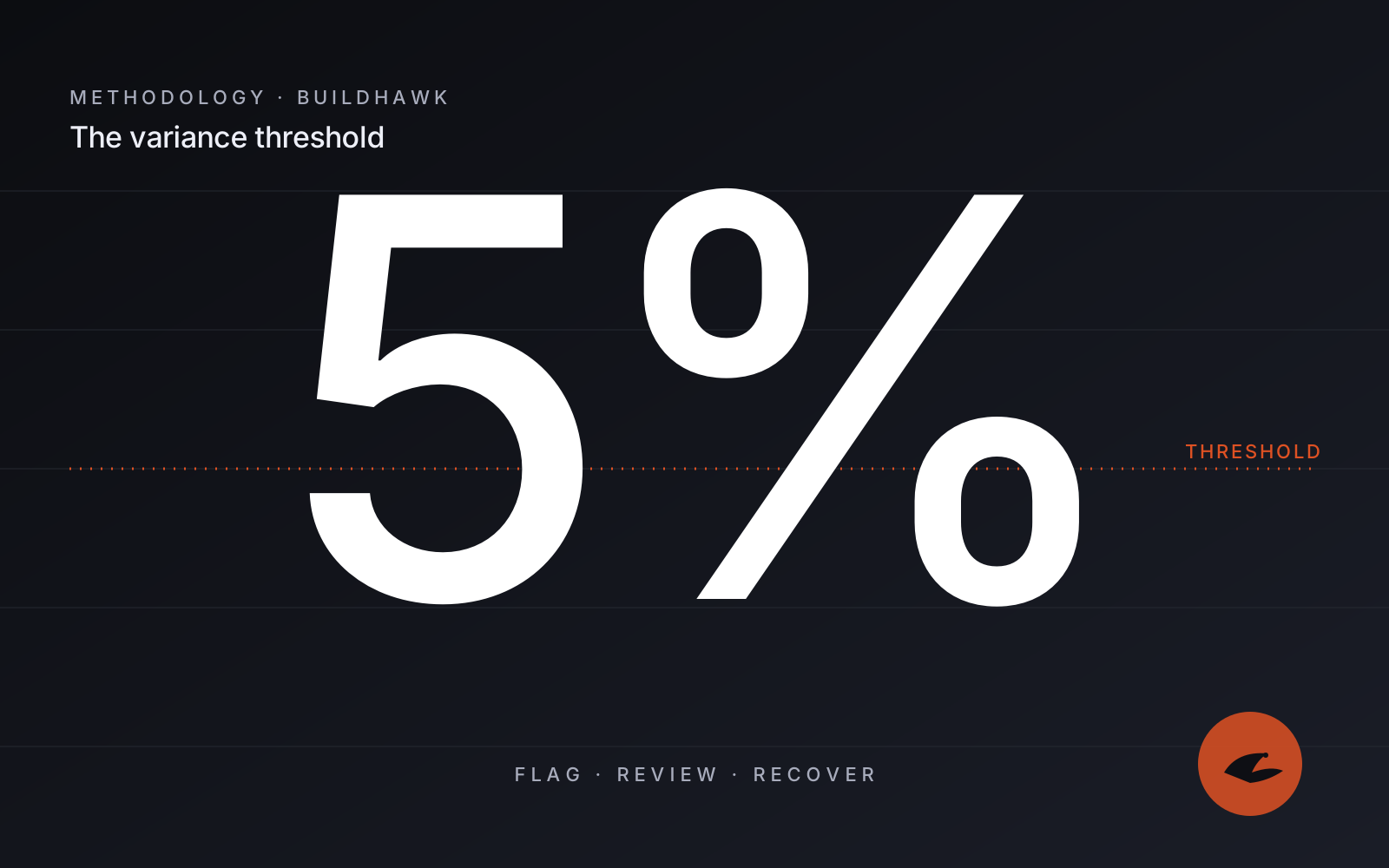
The 5% Variance Rule: zero tolerance starts at contract
Every estimate carries uncertainty. The question is not whether variance exists, it is whether the builder controls it or absorbs it. Up to 5% per line item is acceptable at estimate stage. At contract execution, the tolerance is zero.
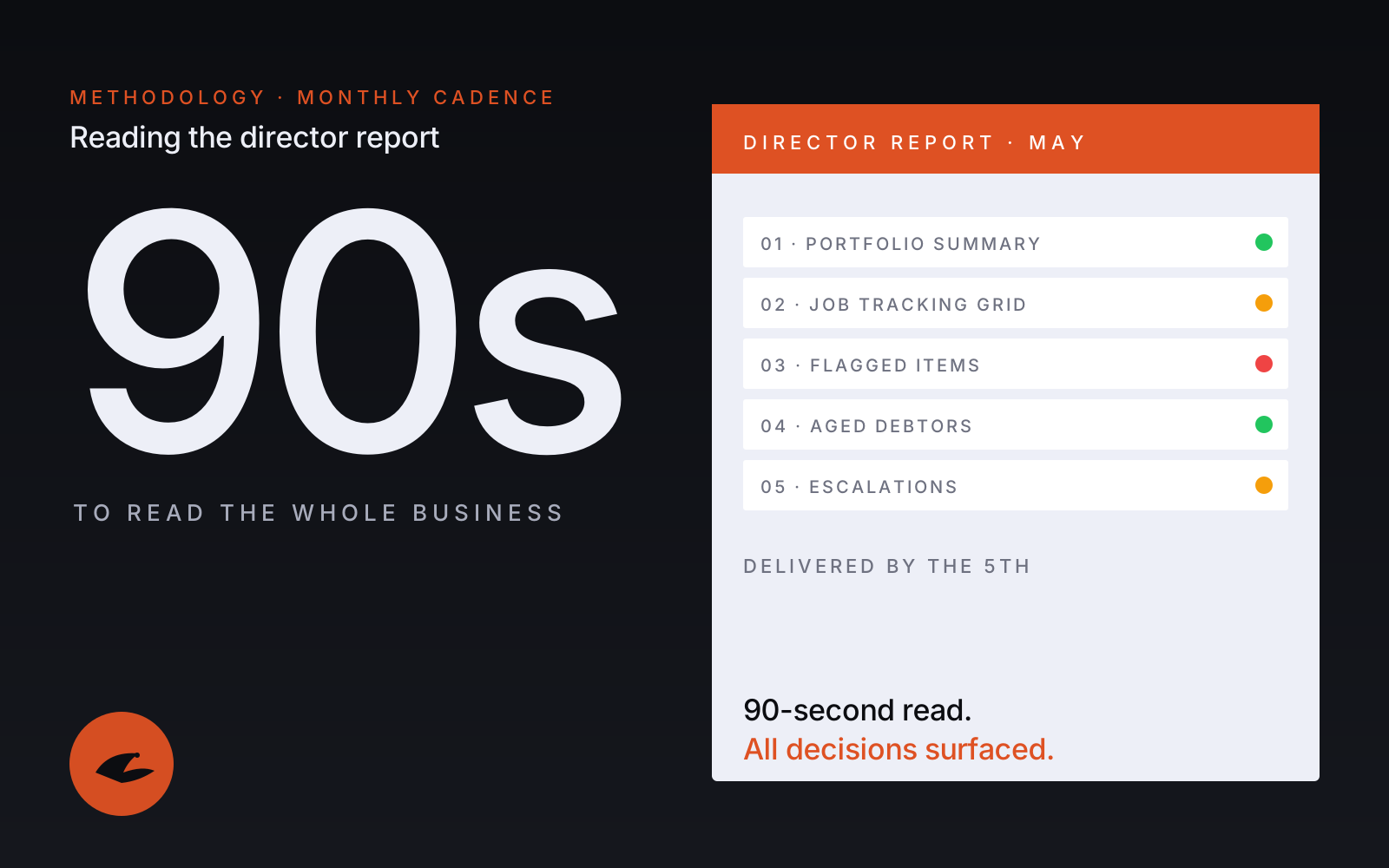
Reading the Monthly Director Report: A Walkthrough
Every active job, every committed cost, every flagged variation, every dollar of cash position, in one report by the 5th of the month. Here is how to read it in 90 seconds and what to act on first.