The geo-report gap: why sitework eats margin between bore holes
A geotechnical report tells you what is at three or four points on the site. Builders who price sitework as a locked sum are pricing those points as though they represent the entire allotment. The gap between bore holes is where margin disappears.

Nathan Holloway
Founder · BuildHawk and Hawktress
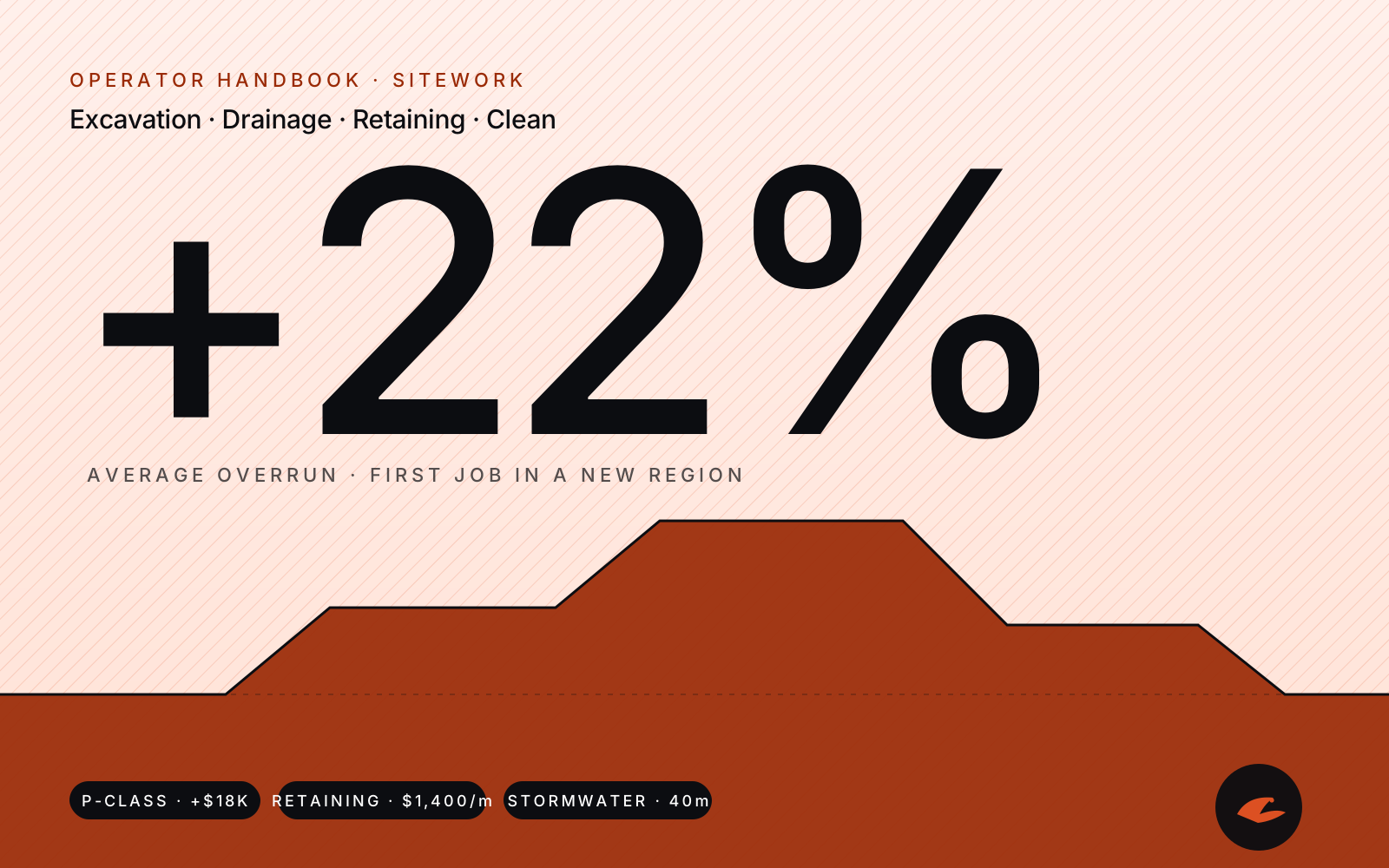
Sitework kills more first-year margins than any other trade on the schedule. Not because builders are careless. Because sitework is the one stage where the ground decides what it costs, and the ground does not care what the estimate says.
The mistake is consistent: a builder prices sitework as a locked sum at tender, reviews the geotechnical report, and assumes the report tells the full story. They win the job. They mobilise. And somewhere between topsoil strip and slab prep, they hit conditions that the report never captured. Rock in a zone between bore holes. Unexpected fill in a corner of the site that was never tested. A perched water table that only reveals itself when excavation opens up the full footprint.
Every one of these is a cost the estimate did not carry. Every one of them comes off margin.
Why the geo report is not the whole picture
A geotechnical report is a mandatory document. No building permit issues without one. The builder has it at tender, and they price sitework on the basis of what it says. That is the correct starting point. It is not a complete picture of what is in the ground.
A standard residential geotechnical investigation involves three to four bore holes across the site. Those bore holes produce accurate data at the exact point they were drilled. What they do not produce is certainty about every other point on the allotment. The ground between bore holes is interpolated, not tested.
Why year one is the highest-risk period
An experienced builder develops a calibrated sense of sitework exposure over time. They know which postcodes carry rock risk between bore holes. A builder in their first year does not have that history.
The spoil calculation builders get wrong
Spoil removal is one of the most consistently underpriced line items in residential sitework, and the error is almost always the same. Soil does not leave a site in the same volume it occupies in the ground. Clay bulks at 20 to 30%. Rock bulks at 30 to 40% or higher.
The correct position: allowance, not locked sum
Having a geotechnical report does not mean sitework should be priced as a locked sum. It means the builder has confirmed data at three to four points and interpreted data everywhere else.
The sitework stage is where the ground between the bore holes takes over. The builder's job is to price that uncertainty correctly before signing, not to discover it mid-excavation and absorb it in silence.
— BuildHawk
Written by
Nathan Holloway
Founder · BuildHawk and Hawktress
Related articles
See all
Variation Control: The System That Removes Discretion
A builder can price a job accurately, manage trades well, and still finish in the red. In most cases, the cause is the same: variations that were completed but never properly controlled.
Why every builder underprices sitework in a new region
Excavation, drainage, retaining and site clean. Together they are usually 4 to 7% of the contract. Builders almost universally get them wrong on the first job in a new region. Here is what to actually budget.