How to check if a construction estimate is accurate
Knowing **how to check if a construction estimate is accurate** can help Australian builders identify costly errors before they affect a tender or project budget. From reviewing project scope and verifying quantities to checking material, labour, and subcontractor pricing, several factors can influence estimate reliability. This guide explains how to review construction estimates, identify missing costs and assumptions, compare figures with current market conditions, and determine when an independent review may be worthwhile. It also explores how BuildHawk’s construction estimating services can provide additional support and clearer cost visibility for builders across Australia.

BuildHawk
Founder · BuildHawk and Hawktress

Summarized answer: You can check if a construction estimate is accurate by reviewing the project scope, verifying quantities, checking material and labour rates, confirming subcontractor pricing, identifying missing costs, and comparing the estimate with current market conditions. A reliable estimate should clearly document its assumptions, inclusions, exclusions, allowances, and pricing basis. When there is uncertainty, having an experienced estimator independently review the estimate can help identify errors before they affect a tender or project budget.
Overview
Knowing how to check if a construction estimate is accurate can help builders identify errors before they become expensive problems.
- Review the scope: Make sure the estimate covers the complete project scope shown in the latest drawings and specifications.
- Verify quantities: Check the quantity takeoff against the drawings to identify missing, duplicated, or incorrect measurements.
- Check current prices: Compare material, labour, equipment, and subcontractor rates with relevant current pricing.
- Look for omissions: Make sure site costs, preliminaries, waste, delivery, equipment, and other applicable expenses have been considered.
- Review assumptions: Understand what has been assumed, allowed for, excluded, or estimated rather than confirmed.
- Compare the total: Check whether the overall estimate is reasonable compared with similar projects and available market information.
- Get a second review: An independent estimator can provide another perspective and identify issues an internal team may overlook.
- BuildHawk can help: BuildHawk provides professional construction estimating services across Australia to help builders improve cost visibility and estimate confidence.
Why construction estimate accuracy matters

A construction estimate is more than a list of prices.
It can influence whether a builder decides to tender for a project, how much they quote, what margin they expect, and whether the project is financially viable.
If the estimate is too high, the tender may become uncompetitive.
If it is too low, the builder may win the project but discover that the budget does not adequately cover the actual cost of delivering the work.
Neither outcome is ideal.
This is why builders should understand how to check if a construction estimate is accurate before relying on the final number.
Accuracy does not mean that an estimate will exactly match the final project cost. Construction projects can change because of variations, site conditions, design revisions, price movements, labour availability, and other unforeseen circumstances.
Instead, an accurate estimate provides a well-supported cost baseline based on the information available at the time.
1. Start by reviewing the project scope
The first step in checking an estimate is making sure everyone is estimating the same project.
Review the latest drawings, specifications, schedules, scope of works, and other project documentation.
Check whether the estimate reflects:
- The latest drawings: Make sure superseded plans have not been used.
- The complete scope: Confirm that all required work is represented.
- Specified materials: Check that the estimate reflects the products and finishes specified.
- Design changes: Confirm that recent revisions have been incorporated.
- Site requirements: Consider access, conditions, logistics, and other project-specific requirements.
An estimate can appear mathematically accurate while still being wrong if it is based on outdated or incomplete project information.
2. Check the quantity takeoff
The quantity takeoff is one of the most important parts of a construction estimate.
A takeoff identifies the quantities of materials and work required to complete the project.
For example, an estimator may calculate quantities for concrete, reinforcement, structural steel, timber, roofing, plasterboard, flooring, windows, doors, fixtures, and finishes.
To check a takeoff, compare the quantities against the drawings and specifications.
Look for:
- Missing items: Materials or work that have not been measured.
- Duplicate items: The same work included more than once.
- Incorrect measurements: Dimensions or quantities that do not match the drawings.
- Incorrect units: For example, using square metres instead of linear metres.
- Incorrect specifications: Quantities may be correct but based on the wrong product or material.
- Unaccounted waste: Appropriate wastage allowances may need to be considered depending on the material.
If you are asking how can you verify construction quantities, the most reliable approach is to trace the quantities back to the relevant drawings and project documentation.
3. Verify material costs
Once quantities are confirmed, review the prices applied to those quantities.
Material prices can change, so an estimate based on outdated pricing may no longer represent current expected costs.
When checking material costs, consider:
- Supplier pricing: Are rates based on current supplier information?
- Product specifications: Is the correct product being priced?
- Delivery: Are freight and delivery charges included where applicable?
- Wastage: Has appropriate material wastage been considered?
- Quantity discounts: Are any available discounts realistic and achievable?
- Price validity: How recently were supplier prices obtained?
For larger projects, even a small difference in unit pricing can have a significant effect on the overall estimate.
4. Review labour costs
Labour is another major component of construction costs.
An estimate should reflect the amount of work required, expected productivity, appropriate labour rates, and project conditions.
When reviewing labour costs, consider whether the estimate accounts for:
- Required labour hours
- Applicable labour rates
- Project productivity
- Site access
- Construction complexity
- Supervision
- Overtime or additional working requirements
- Relevant employment-related costs
The cheapest labour assumption is not necessarily the most accurate.
For example, difficult site access or a complex construction sequence may increase the amount of labour required even when the underlying task appears straightforward.
5. Check subcontractor pricing
Many construction projects rely heavily on subcontractors.
Electrical, plumbing, mechanical, earthworks, roofing, painting, glazing, landscaping, and specialist trades can represent significant portions of the project budget.
Review subcontractor quotes carefully rather than simply accepting the lowest number.
Check:
- Scope: Does the quote cover the entire required scope?
- Exclusions: Are important items excluded?
- Provisional amounts: Are allowances being used instead of firm pricing?
- Validity: Is the quote still current?
- Inclusions: Are materials, labour, equipment, and delivery covered?
- Variations: Are there conditions that could result in additional costs?
A subcontractor quote can be inexpensive because it excludes work that another quote includes.
Comparing scope is therefore just as important as comparing price.
6. Look for missing costs
One of the easiest ways for a construction estimate to become inaccurate is for important cost categories to be overlooked.
A thorough review should consider whether the estimate includes relevant:
- Site establishment
- Temporary works
- Site facilities
- Waste removal
- Delivery and logistics
- Plant and equipment
- Traffic management
- Temporary services
- Site supervision
- Permits and applicable fees
- Insurance-related costs
- Preliminaries
- Overheads
Not every project requires every item.
The objective is to make sure relevant costs have been considered rather than assuming that a standard checklist applies to every project.
7. Review assumptions and exclusions
An estimate is only as reliable as the assumptions behind it.
For example, an estimator may assume that:
- Site access is straightforward
- Ground conditions are suitable
- Specified materials are available
- Supplier pricing remains valid
- No major design changes occur
- Subcontractor quotes remain available
If these assumptions change, the project cost may change as well.
This is why a good estimate should clearly identify its assumptions and exclusions.
Ask:
What has been priced, what has been excluded, and what has simply been assumed?
This question can reveal risks that are not obvious from the final project total.
8. Compare the estimate with market conditions
Another way to verify a construction cost estimate is to compare its major cost categories with current market information.
This does not mean expecting every estimate to match an industry average.
Projects differ significantly in size, location, specifications, construction methods, site conditions, and quality requirements.
However, unusually high or low costs can be a reason to investigate further.
For example, if one trade appears significantly more expensive than comparable supplier or subcontractor pricing, ask why.
Similarly, an unusually low allowance may indicate an omitted scope item or outdated pricing.
The goal is not to force every number toward an average. It is to identify numbers that deserve closer attention.
9. Check the estimate against the drawings again
After reviewing individual costs, return to the drawings.
This second review is useful because estimating errors are not always isolated to one cost category.
Check whether the final estimate accounts for the full project.
Ask:
- Does every major drawing element have a corresponding cost?
- Are all floors and areas included?
- Are external works included where required?
- Are finishes consistent with the specifications?
- Are structural and engineering requirements reflected?
- Are changes between drawing revisions incorporated?
This provides another opportunity to identify scope gaps.
10. Look for common estimating errors
Understanding common mistakes can make estimate reviews more effective.
Some frequent problems include:
- Using outdated drawings
- Missing scope items
- Duplicating quantities
- Using incorrect measurements
- Applying outdated material prices
- Underestimating labour
- Accepting incomplete subcontractor quotes
- Forgetting site and preliminary costs
- Failing to account for waste
- Using unclear allowances
- Not documenting exclusions
- Failing to update the estimate after design changes
A structured review process can reduce the likelihood of these issues being overlooked.
What makes a construction estimate accurate?
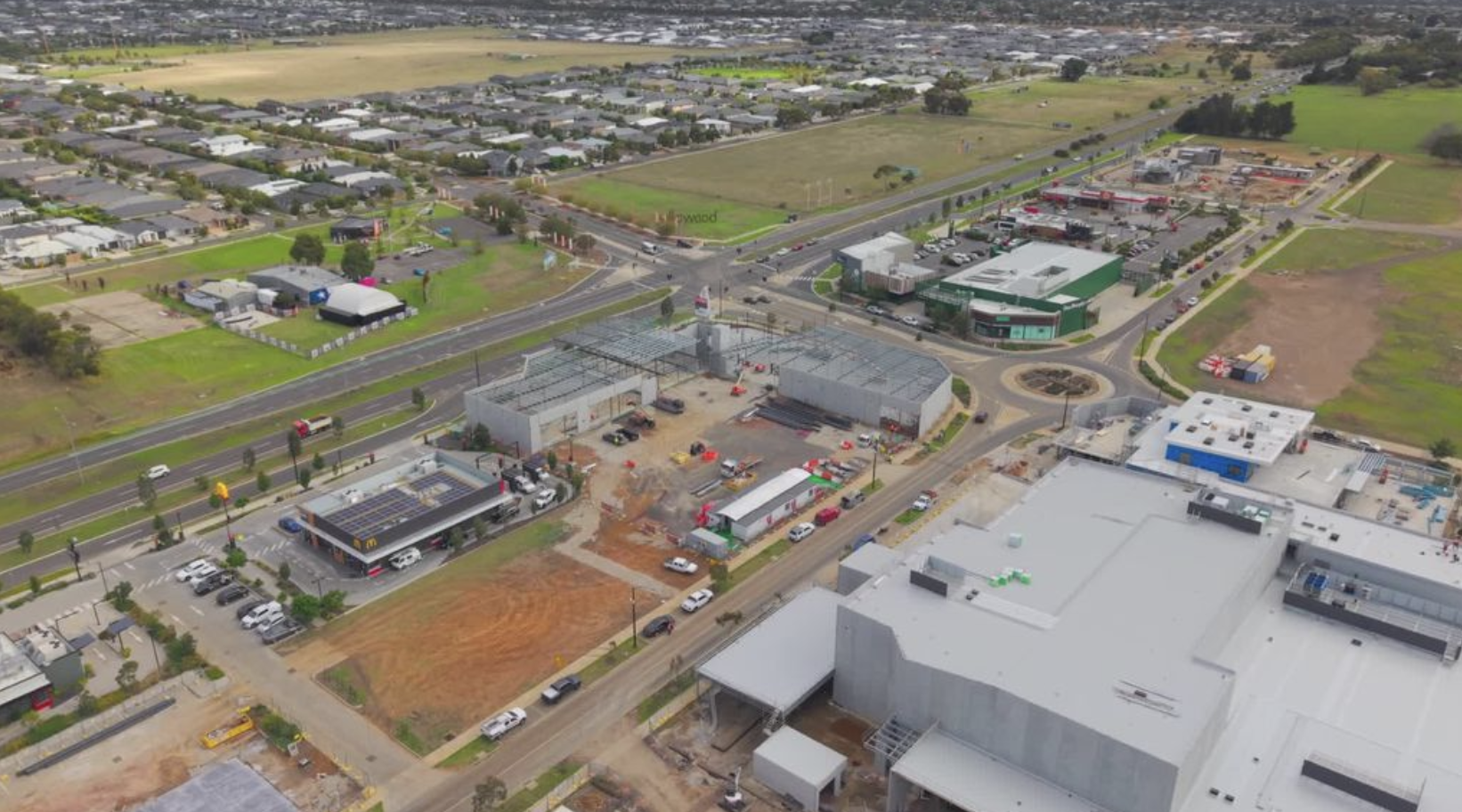
So, what makes a construction estimate accurate?
It starts with good project information.
An estimate is more likely to be reliable when it is based on complete and current drawings, clearly defined specifications, accurate quantities, relevant pricing, realistic labour assumptions, and properly reviewed subcontractor costs.
A strong estimate should also be transparent.
The builder should be able to understand how the final number was developed.
That means the estimate should ideally show:
- Quantities
- Unit rates
- Material costs
- Labour costs
- Subcontractor costs
- Equipment costs
- Site costs
- Allowances
- Exclusions
- Assumptions
- Overheads
- Contingencies where appropriate
Transparency makes it easier to identify and correct errors.
How accurate should a construction estimate be?
There is no single accuracy percentage that applies to every type of estimate.
The expected level of accuracy depends on the project's design stage, available information, estimating methodology, and purpose.
An early conceptual estimate may naturally have more uncertainty than a detailed tender estimate based on completed drawings and specifications.
This is important because estimate accuracy should always be considered in context.
A builder should ask:
How complete was the project information when this estimate was prepared?
The more developed the design and scope, the more detailed and reliable the estimate can generally become.
When should you get an independent estimate review?
An independent review can be particularly valuable when:
- The project is high value: Small percentage errors can translate into significant amounts.
- The tender is competitive: Pricing accuracy can directly affect your chance of winning.
- The project is complex: Multiple trades and unusual construction requirements increase estimating risk.
- The estimate seems unusually high or low: Significant deviations deserve investigation.
- Your team is under pressure: Time constraints can make errors easier to overlook.
- You lack internal estimating capacity: An external estimator can provide additional expertise.
A second review does not necessarily mean the original estimator was wrong.
It provides another layer of quality control.
How BuildHawk can help improve construction estimate accuracy
For builders, inaccurate estimates can create problems long after the spreadsheet has been completed.
An underestimated tender can affect margins. Missing scope can result in unexpected costs. Incorrect quantities can lead to procurement issues. Outdated pricing can make an otherwise detailed estimate unreliable.
BuildHawk provides professional construction estimating services across Australia, helping builders review project information, quantities, pricing, and other cost components before they commit to a project price.
Our estimating support can help businesses improve cost visibility and reduce the risk of relying on incomplete or inaccurate estimates.
Instead of asking your internal team to repeatedly check every quantity and cost while managing other responsibilities, professional estimating support can provide an additional layer of review.
Depending on project requirements, this may include quantity takeoffs, material and labour estimating, subcontractor pricing, and other relevant estimating work.
The objective is straightforward: give builders clearer information before they make important pricing decisions.
For businesses that regularly prepare tenders, this additional support can also improve estimating capacity without requiring every review to be handled internally.
Whether you need assistance with a single project or ongoing estimating support, BuildHawk can help Australian builders develop a more structured approach to construction cost estimation.
A simple construction estimate accuracy checklist
Before relying on an estimate, run through this checklist:
- Confirm the latest drawings are being used.
- Check that the full project scope is included.
- Verify major quantities against the drawings.
- Check material prices against relevant current rates.
- Review labour hours and labour rates.
- Compare subcontractor quotes and exclusions.
- Check site costs and preliminaries.
- Review equipment and logistics allowances.
- Identify assumptions and exclusions.
- Check whether contingencies are appropriate.
- Compare unusual costs with available market information.
- Confirm that design revisions have been incorporated.
If several items cannot be confidently verified, the estimate may need further review before it is used for tendering or budgeting.
Frequently asked questions
How do you check if a construction estimate is accurate?
You can check a construction estimate by reviewing the project scope, verifying the quantity takeoff, checking material and labour rates, reviewing subcontractor pricing, identifying missing costs, and examining assumptions and exclusions. Comparing key costs with current market information can also help identify unusual figures.
How can I verify a construction cost estimate?
Review the estimate against the latest drawings and specifications, check quantities, verify material and labour rates, examine subcontractor quotes, and confirm that relevant site and project costs are included. An independent estimator can also provide an additional review.
How do I know if a construction estimate is correct?
No estimate can guarantee the final project cost because construction conditions and prices can change. However, an estimate is more reliable when it is based on complete project documentation, accurate quantities, current pricing, realistic labour assumptions, and clearly documented inclusions, exclusions, and assumptions.
What makes a construction estimate accurate?
Accurate construction estimates are generally based on complete and current drawings, detailed quantity takeoffs, relevant material and labour pricing, appropriate subcontractor costs, and consideration of site-specific expenses. Clear documentation of assumptions and exclusions is also important.
How do you check a construction quantity takeoff?
Compare the takeoff with the latest drawings and specifications. Check measurements, units, quantities, materials, and areas for omissions or duplication. Major quantities should be traceable back to the relevant project documentation.
How do you verify material costs in a construction estimate?
Check whether material rates are based on current supplier pricing and whether they correspond to the specified products. Also review delivery, freight, wastage, handling, and other applicable material-related costs.
How do you check labour costs in a construction estimate?
Review the estimated labour hours, productivity assumptions, applicable labour rates, site conditions, construction complexity, supervision, and any additional working requirements. Labour allowances should reflect the actual scope and conditions of the project.
What should be included in a construction estimate?
Depending on the project, an estimate may include materials, labour, subcontractors, equipment, site costs, preliminaries, logistics, waste, overheads, allowances, and appropriate contingencies. The estimate should also clearly state its assumptions and exclusions.
What causes construction estimates to be inaccurate?
Common causes include incomplete or outdated drawings, incorrect quantities, outdated pricing, omitted scope, unrealistic labour assumptions, incomplete subcontractor quotes, and failure to account for site-specific costs or project changes.
What are the most common construction estimating errors?
Common errors include using outdated drawings, missing scope items, duplicating quantities, applying incorrect measurements, using outdated material rates, underestimating labour, overlooking subcontractor exclusions, and failing to account for site and preliminary costs.
Final thoughts
Knowing how to check if a construction estimate is accurate can help builders make better tendering and project planning decisions.
The process starts with the basics: review the scope, verify the quantities, check material and labour pricing, review subcontractor quotes, identify missing costs, and understand the assumptions behind the numbers.
Most importantly, do not judge an estimate solely by its final total.
A detailed estimate that is slightly higher may be more reliable than a cheaper estimate that has omitted important costs. What matters is whether the estimate provides a realistic and transparent picture of the expected project cost.
For Australian builders who want additional estimating expertise, BuildHawk provides construction estimating services across Australia. Professional estimating support can provide an independent layer of review, improve cost visibility, and help reduce the risk of inaccurate pricing affecting your next tender.
A reliable estimate will not eliminate every construction risk—but it can give you a much stronger starting point for managing those risks.
References
Australian Bureau of Statistics. (n.d.). Producer price indexes, Australia. https://www.abs.gov.au/statistics/economy/price-indexes-and-inflation/producer-price-indexes-australia
Australian Building Codes Board. (n.d.). National Construction Code. https://www.abcb.gov.au/
Written by
BuildHawk
Founder · BuildHawk and Hawktress
Related articles
See all
How long does a construction estimate take?
How long does a construction estimate take? The answer depends on the project’s size, complexity, documentation, number of trades, and level of detail required. Simple residential projects may take a few hours to several days, while complex commercial tenders can take several weeks. This guide explains what affects construction estimate turnaround time, why complete project information matters, and how clear pricing assumptions can help Australian builders make more informed decisions. It also explores how BuildHawk’s construction estimating services can support a more structured and transparent estimating process.
What information does a construction estimator need?
A construction estimator needs accurate and complete project information to develop a reliable estimate. From construction drawings, specifications, quantities, material and labour costs to site conditions, project schedules, and subcontractor pricing, each detail can affect the final project cost. This guide explains what information a construction estimator needs, why current and consistent documentation matters, and how incomplete or outdated information can lead to inaccurate quantities, missed costs, and budget overruns. It also explores how a structured estimating process and professional construction estimating services from BuildHawk can help Australian builders make more informed project decisions.